
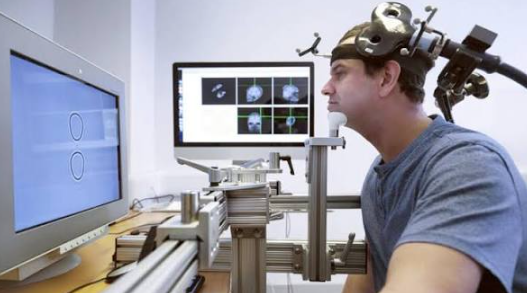
Transcranial magnetic stimulation has moved from experimental curiosity to mainstream psychiatric care in a surprisingly short amount of time. Thousands of people pursue it every year, most of them after antidepressants have failed to deliver the relief they were promised. Yet despite its growing popularity, plenty of patients walk into their first session with almost no idea what they are actually signing up for. That gap between hype and reality is worth closing.
This article breaks down how TMS works, who tends to benefit from it, what the side effect profile really looks like, and which questions are worth asking before you commit to a full treatment course. The goal is straightforward: give you enough solid information to have a genuinely informed conversation with a clinician.
How TMS Actually Works
TMS uses a coil placed against the scalp to deliver short, focused magnetic pulses to specific regions of the brain. Those pulses generate small electrical currents in the underlying cortex, which in turn stimulate or inhibit neural activity depending on the frequency and pattern used. The procedure is non-invasive, meaning nothing enters the body, no surgery is involved, and no anesthesia is required. Patients remain awake and seated throughout the session.
For major depressive disorder, the target is typically the left dorsolateral prefrontal cortex, a region that research has consistently found to be underactive in people experiencing depression. By repeatedly stimulating that area over several weeks, clinicians aim to normalize its activity and, by extension, shift mood-related neural circuits. Standard TMS protocols run five days a week for four to six weeks, with each session lasting between 20 and 40 minutes depending on the specific protocol.
A newer variation called theta burst stimulation, or TBS, compresses that stimulation into sessions as short as three minutes. The FDA cleared TBS as an option in 2018, and some clinics now offer accelerated TBS schedules that complete the full course in as little as five days. The compressed timelines are attractive, but the long-term data comparing them to standard protocols is still accumulating.
FDA Clearances and Approved Uses
TMS is not a one-size-fits-all tool. The FDA has granted clearances for specific conditions, and it is worth knowing what those are before assuming TMS is appropriate for any given situation.
| Condition | FDA Status | Year of Clearance |
| Major Depressive Disorder | Cleared | 2008 |
| Obsessive-Compulsive Disorder | Cleared (deep TMS) | 2018 |
| Smoking Cessation | Cleared (deep TMS) | 2020 |
| Anxious Depression | Cleared | 2021 |
| Post-Traumatic Stress Disorder | Under Investigation | Pending |
| Chronic Pain / Fibromyalgia | Off-label use only | N/A |
Off-label use of TMS is legal and not uncommon, but it carries a different evidence burden. Clinicians pursuing those applications are working with research that is typically earlier-stage and less standardized. That is not automatically a reason to decline, but it is a reason to ask pointed questions about the evidence base behind any off-label recommendation.
Who Responds Best to TMS
Response rates matter a great deal when evaluating whether TMS makes sense for a specific person. The clinical picture is more nuanced than either advocates or skeptics tend to suggest.
A large naturalistic study published in the Journal of Clinical Psychiatry found that approximately 58 percent of patients with treatment-resistant depression experienced a meaningful response to TMS, and around 37 percent achieved full remission. Those numbers come from a real-world sample, not a controlled trial, which makes them a reasonable benchmark for what patients and clinicians can realistically expect.
Several factors appear to predict better outcomes. Patients with a shorter history of the current depressive episode tend to respond more favorably. Younger age at time of treatment has shown a positive correlation in some analyses. And perhaps counterintuitively, patients who have failed fewer medication trials sometimes respond better than those who have exhausted many options, though TMS is still routinely offered in highly treatment-resistant cases.
- Shorter duration of the current depressive episode
- Fewer prior failed antidepressant trials
- No active psychotic features
- No metal implants in or near the head (absolute contraindication)
- No history of seizures or epilepsy (relative contraindication requiring careful evaluation)
Side Effects: The Common, the Uncommon, and the Serious
One of the most frequently cited advantages of TMS over medication is its side effect profile. That claim is broadly accurate, but it deserves some unpacking rather than blanket endorsement.
Common Side Effects
The most frequently reported side effects are scalp discomfort and headache at the site of stimulation. These tend to be most pronounced in the first few sessions and diminish as patients acclimate to the sensation. Facial twitching or jaw clenching during the pulse delivery is also common and stops immediately when the machine stops. Lightheadedness immediately after a session is reported occasionally but usually resolves within minutes.
Uncommon and Serious Side Effects
Seizure is the most serious risk associated with TMS. The estimated incidence across published clinical data is approximately 1 in 10,000 sessions, making it rare but not theoretical. Hearing damage is another documented risk if proper ear protection is not used consistently, since the coil produces a loud clicking sound. Some patients also report a temporary worsening of mood or heightened anxiety in the early weeks of treatment, which can be disorienting if they were not warned to expect it.
People considering TMS should also know that a small subset of patients report outcomes that were significantly worse than they anticipated. Understanding the full range of repercussions of TMS before beginning a course, including both the positive possibilities and the adverse experiences some patients describe, helps set realistic expectations and supports a more grounded decision-making process.
How TMS Compares to Electroconvulsive Therapy
TMS and electroconvulsive therapy, or ECT, are both brain stimulation treatments for depression, but they differ substantially in mechanism, intensity, and appropriate use case. Understanding the comparison helps clarify when TMS is the right first choice and when a clinician might recommend something more aggressive.
| Factor | TMS | ECT |
| Mechanism | Magnetic pulses, no seizure induced | Electrical current, seizure is therapeutic goal |
| Anesthesia required | No | Yes, general anesthesia |
| Cognitive side effects | Minimal to none | Memory loss common, often temporary |
| Efficacy in severe/psychotic depression | Lower | Higher |
| Outpatient-friendly | Yes | Typically requires monitoring |
| Insurance coverage | Increasingly common | Generally covered for approved cases |
ECT carries a stronger evidence base for the most severe presentations of depression, including cases with psychotic features or imminent safety concerns. TMS is generally preferred when the depressive episode is serious but not immediately life-threatening, and when preserving cognitive function is a priority. The two are not competitors so much as tools suited to different points on a clinical spectrum.
Questions Worth Asking Before You Start
The quality of a TMS outcome depends not just on the technology but on the clinical setting, the training of the technician, and how well the treatment is matched to the individual patient. Asking the right questions upfront can save a significant amount of time, money, and frustration.
- What protocol will be used, and why is it appropriate for my specific diagnosis?
- How many TMS sessions has this clinic administered, and what are their observed response rates?
- Will a physician be supervising the treatment, or is it technician-administered?
- What happens if I experience increased anxiety or mood instability during the course?
- How will we measure whether the treatment is working, and at what point would we reconsider the approach?
- What does the maintenance plan look like after the initial course ends?
A clinic that cannot answer those questions clearly or that discourages them is a red flag. Reputable providers welcome scrutiny. They understand that patients who feel informed are more likely to complete the full treatment course and to report side effects accurately along the way.
What Happens After the Treatment Course Ends
TMS is not a permanent fix for most people. Research suggests that the effects of an initial course tend to last somewhere between six months and a year for many responders, though some patients maintain benefits considerably longer. When depression returns, a second course of TMS is often considered, and many patients respond similarly to their initial treatment.
Maintenance TMS, in which patients receive periodic booster sessions after the initial course, is an increasingly common strategy. There is no universally agreed-upon maintenance schedule, and protocols vary widely between clinics. Combining TMS with psychotherapy has shown promise in several studies, particularly cognitive behavioral therapy, as it gives patients tools to work with the improved mood state that TMS can create.
Staying in active communication with the prescribing clinician after the course ends is just as important as the treatment itself. Tracking mood with a validated scale, reporting any early signs of relapse promptly, and having a clear plan for what to do if symptoms return are the practical steps that tend to separate patients who sustain their gains from those who cycle back to baseline without a clear pathway forward.